Tuesday, September 29, 2020

Decision Day

     Beginning with the article from Cherry, it states that "The brain actually experiences the story in the same way it would as if you were inside the narrative itself. Further, stories make us more empathetic and able to understand the thoughts and feelings of others (Paul 2012). If stories foster greater empathy, then telling stories may serve to deepen students' understanding of others. Since stories create interconnections and community, they are a natural fit for a project-based approach." This provides a structured thesis on why I am going to write a magazine. With a magazine, I can include more stories that people feel empathetic. The more empathy, the more understanding. In a magazine, a reader will feel a deeper connection to a personal story directed at them.    

    From an article by Franklin, "So it is my belief that the best thing lit mags could do right now is form an advertising collective and pool resources. As a group we have a visibility problem. Many, many voracious readers have no idea lit mags even exist, let alone that this one or that one might be really fabulous. I believe an aggressive and well-designed campaign to the broad reading public selling the very concept of lit mags would benefit most participants and the cost to any single magazine would be more than manageable." From this excerpt, its concluding that most readers don't even know about magazines. If a magazine company had more advertising, the audience would expand past the literary readers. It is possible to have a manageable magazine company based on the text. Because of this, it seems like a clear choice that producing a magazine would be beneficial to everyone. Also stated in this article by Franklin, "Really, the best way to reach a larger public is to publish the magazine in more formats and more collections of works--e.g., online delivery and delivery through magazine services such as Project Muse. I don't feel any compulsion to reach a barber who isn't interested in literature. I'm more interested in making us available in as many ways as can reasonably be done so that the person who in fact is interested can find and access us." It is evident that magazines can be produced in more ways than one. This is important in my case because I am producing the magazine online to be read by someone online. This will be easier for the people who want convenience and easy edibility.  

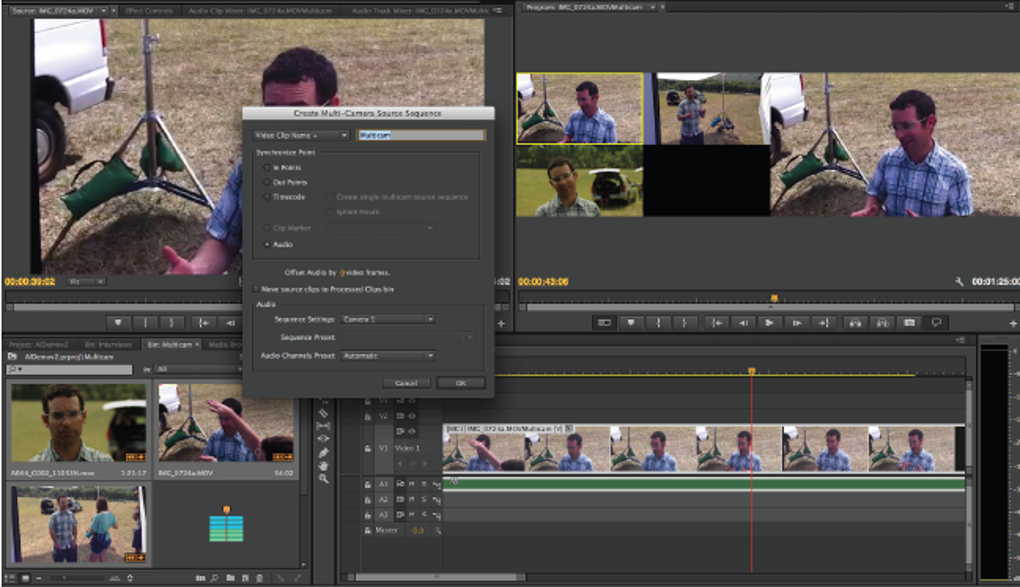
    Moving on, to support the fact that I am going to produce a magazine over a movie, let's look at a credible production software called InDesign. InDesign is a tool used for in depth production methods with the ability to create a master piece. The best benefit of using InDesign is the advanced tools option. This gives a plethora of options for creators and introduces creativity a writer should have. Furthermore, I can infuse many methods of mise en scène through colored text, directed lighting, critical camera shots, and more. On the other hand, the other software, Premier Pro, is used for creating movies. When reviewing I got very confused and frustrated. It took way to long to just input pictures, and your supposed to make a movie. Their is too many tabs and effects to really concentrate on production. So I concluded that the most convenient and manageable choice of production is a magazine through InDesign.  


Monday, September 21, 2020

Magazine Cover Review

     To begin, the article by Scherer states that, "No one can deny the visual sea change that has overtaken the magazine industry in the last three decades. Most magazines now resemble movie posters more closely than they do the dry pages of a book." Through analyzing, I can determine that there has been a shift in the amount of people who read magazines. This is because movies offer a better opportunity to attract viewers. Magazine creators can only somewhat include the things involved in a movie. For example, imagery, sound, music, mise en scene, camera edits, transitions, etc. 

    Also said in Scherer's article, "Despite such changes, the percentage of young readers for trademark titles has continued to erode. Media-Mark Research, which tracks magazine readership, has noted a steady decline over the last twenty-six years in the percentage--and number--of readers between the ages of eighteen and thirty-four for whole categories of magazines..." This is a direct continuation of the last quote. It shows that despite best efforts by magazine companies, the amount of younger readers is decreasing. This is because the attention span of the younger generations are getting shorter and shorter. The only way to fix this problem is by including transitions, like that in movies, that are quick and don't lose the focus. This is impossible to include in a magazine. 

    On the other hand, magazine covers illustrate differences between them and movies. Beginning with Cosmopolitan, you can tell by the masthead what the magazine is going to be about. Cosmo- meaning beauty and politan- meaning political. The front cover highlights this by having a nude young woman on the cover surrounded by the words sexy, beautiful, gorgeous, and more feminine products like sex toys, high heels, and manicure.  Also, some of the headlines bring up the political issues like wearing mask and racism. The target audience is obviously for women to express their beauty and voice. 

    Another magazine for women is the Better Homes and Gardens magazine's. These articles are for the crafty young and old women wanting to learn to improve their cooking, cleaning, and hosting. A selling point of the magazine is that it has a holiday theme. Cover titles include: ideas, tricks, and knowledge. Appealing topics make the magazine more unique. Appeal to food is shown through out as well. 

    Moving on, another magazine called GQ, has a famous person capitalized on the cover. The topics are vulgar with a background of a riot at a restaurant and what was left behind. The text is slick and mostly the same color. This is appealing towards the younger readers even though evidence shows younger people are reading magazines anymore. Sports Illustrated is targeted towards men, their way of doing it is more cynical. The cover is hot women with lively color and attractive clothes. The advertisements are for more wealthier men. These articles are for men who are looking for more then what is in the title. 

    To summarize, the movie can produce editing that magazines simply can't include. Although this is the case, magazines work really well with targeting a specific audience by including pristine photographs that draw in readers. New techniques have also been introduced to bring out style of font, and textual correspondence like the wrap around the text technique. 


Monday, September 14, 2020

Title Sequence Clip Review

    To start off, the 5th paragraph of the article "First Frames: titles in the digital realm," says, "Contemporary titles artists are experimenting with text and visuals with infinite variety, through methods such as scanning hand-drawn materials, Photoshop manipulation, 3D and 2D animation programs, and of course After Effects, a program that seems made specifically for the graphic designer in every filmmaker." What can be drawn from this is the plethora of options that are being experimented in introductions to movies. This supports the fact that reading a magazine can't offer the technological advances that a movie can offer. When reading a magazine, the most 3D you can get is having a pop out book, but most pop out books are made for children. Furthermore, movies infuse sound that includes the Circle of Talent (voice, sound effects, music). The emotions of characters and the mood are more easily obtained. Also stated in the article by Merril, "...the focus on hybrid forms has been driven by 'by the rapid advances in broadband, interactive television and video games'. (8) In terms of feature film making, titles seem to be the one place where computer graphics can be experimented with and showcased, regardless of whether we're watching science fiction, melodrama, or a comic book action flick." Derived from the passage, I can conclude that there has been a shift in the focus of title scenes. Most title screens are represented on new video games to be reviewed by the public. This gives the photographer more opportunities to test and find the best option for film viewers. This information supports the fact that opening title screens in films are the new showcase over magazines and articles.    

    First and foremost is the lion king movie. The lion king's introduction is very bright with imagery of the forest and all the animals living in harmony along with dense mise en scène that sets up the setting, characters, and mood. The introduction also shows the ceremony of Simba and how important the little cub is going to be in that movie. Also, the movie jaws has a great introduction. The camera angles in this intro are so amazing. The camera angle view was from the P.O.V. of the shark. This effect was to feel and see the unknown of the ocean, there can be things lurching and can easily snag you like a shark. Furthermore, the music portrayed is very important. As the shark gets closer to its victim the rhythm increases in tempo and loudness. This thriller type approach puts the audience on their seats as the suspense builds until the shark gets its victim.   

    Lastly, the James bond movies are entertaining. The movies start off with fast tempo jazz music from the point of view of a gun. This sets up quick to the point action which intrigues the viewers. The action of a dark figure moving through the shadows who commits crimes sets up suspense. The big explosion sets a big impact of exciting action. The introductions to movies have a bigger impact for me. The biggest reason is the different ways music can be used to make suspense, drama, action, misery, etc. To conclude, introductions to movies can showcase better credit scenes, more diegetic and non-diegetic sound, more colorful imagery, more emotion through décor and costumes, and camera movements that put you in the setting. 


Annotated Bibliography

    This is my annotated bibliography for AICE Media Studies. Most of the resources included provided in depth information that I previously...